This is, after all, still a blog about Making Things, and I am still on a journey to find the things that create the most personal joy.
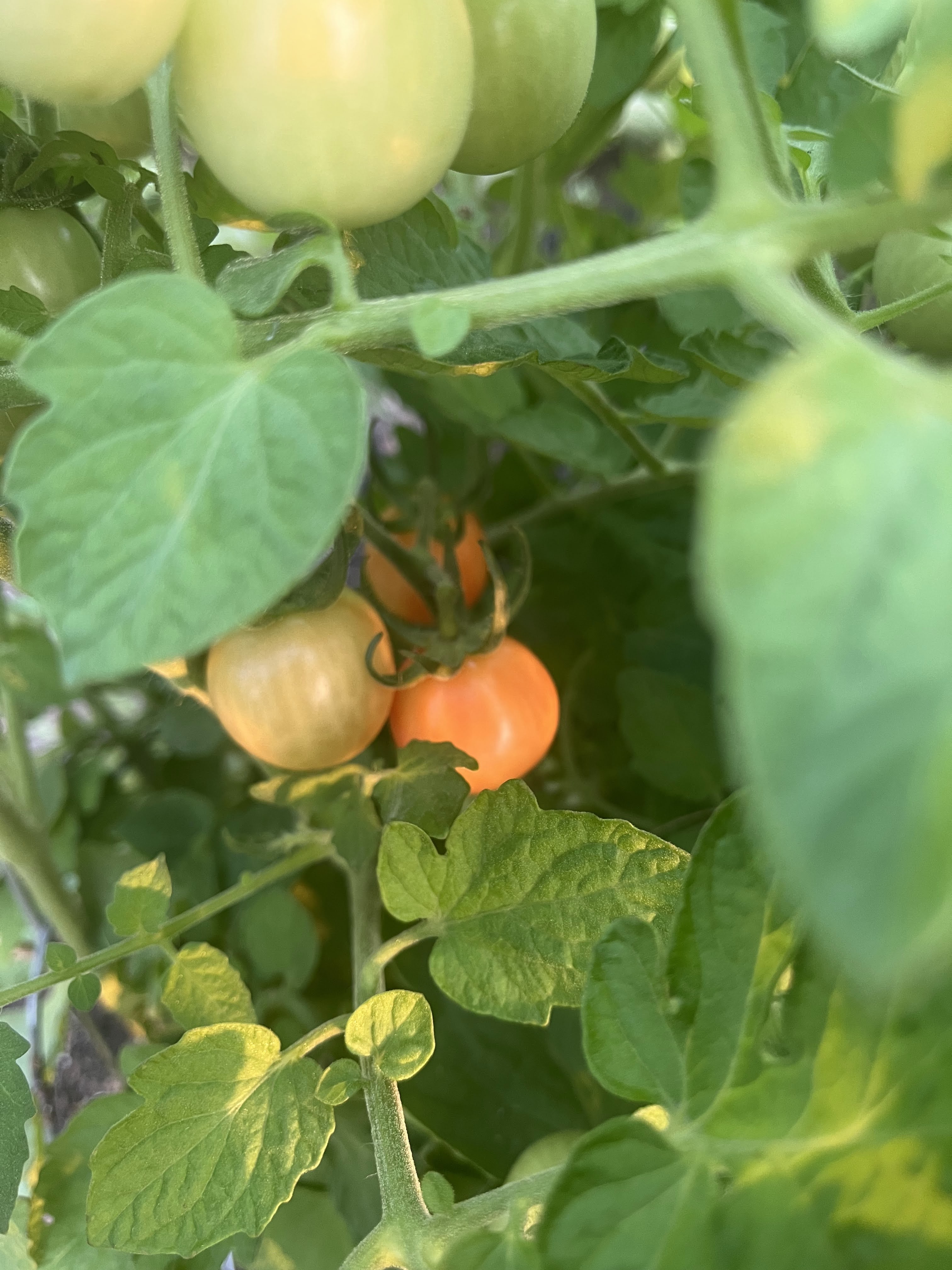
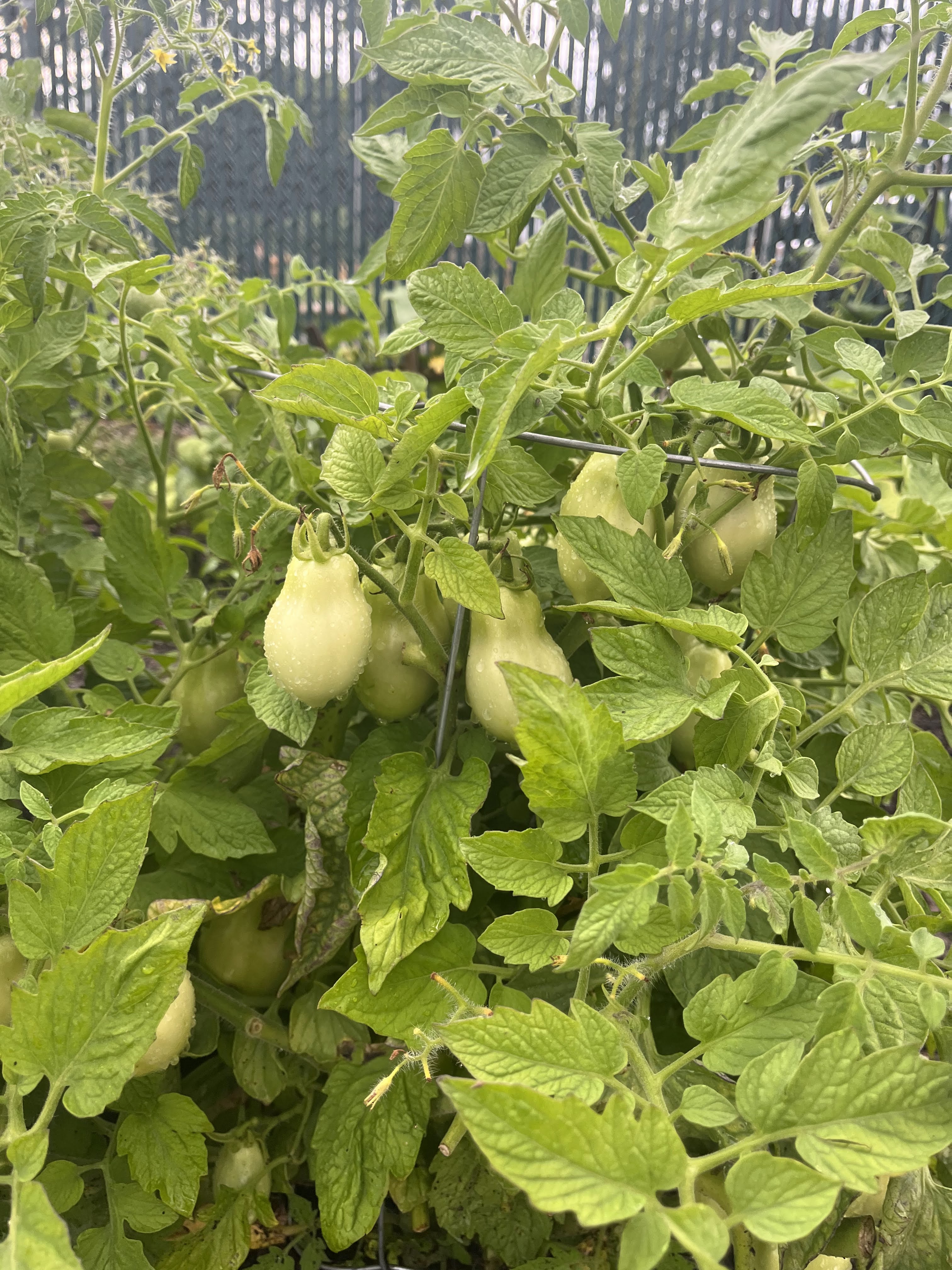
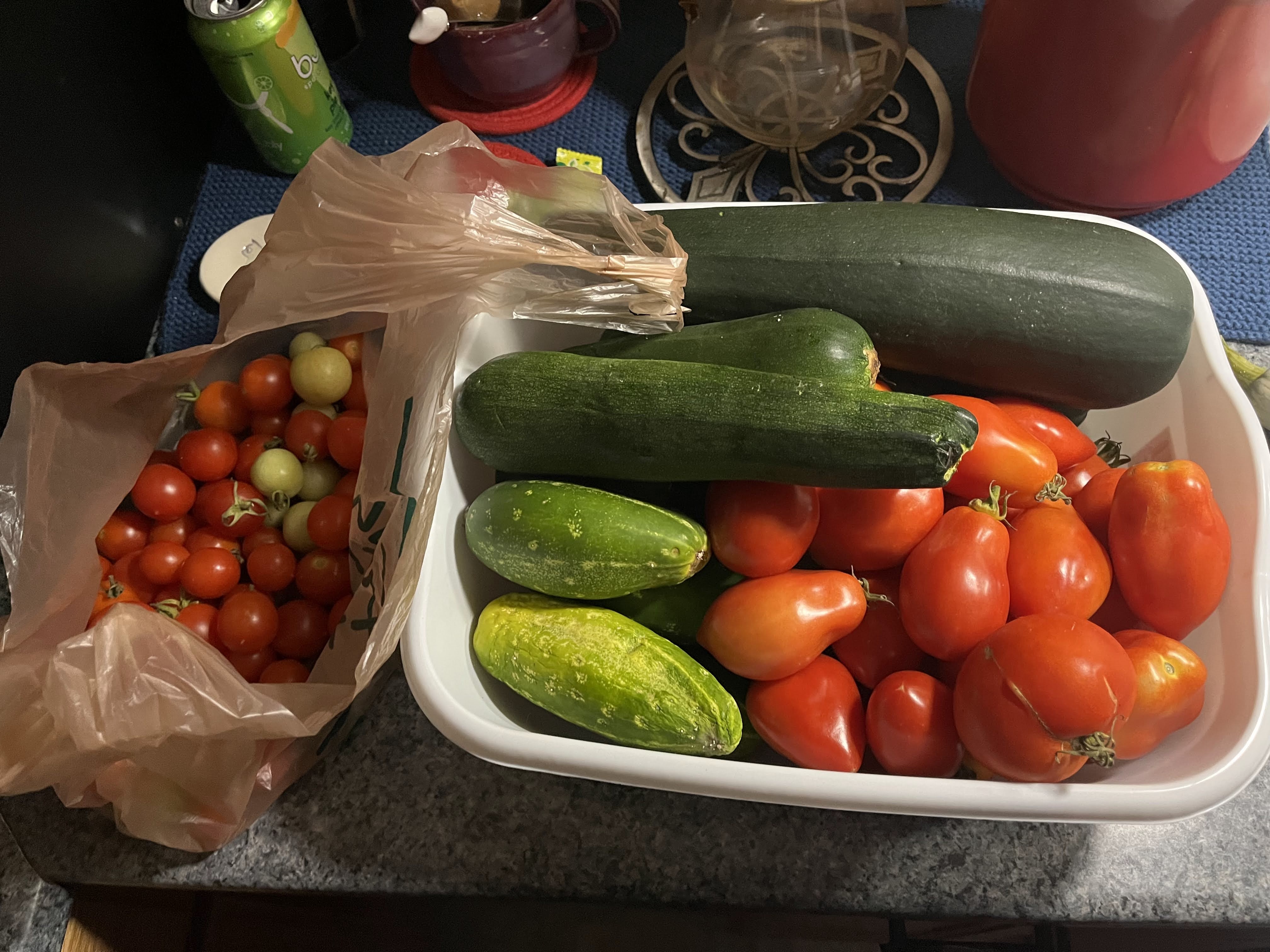
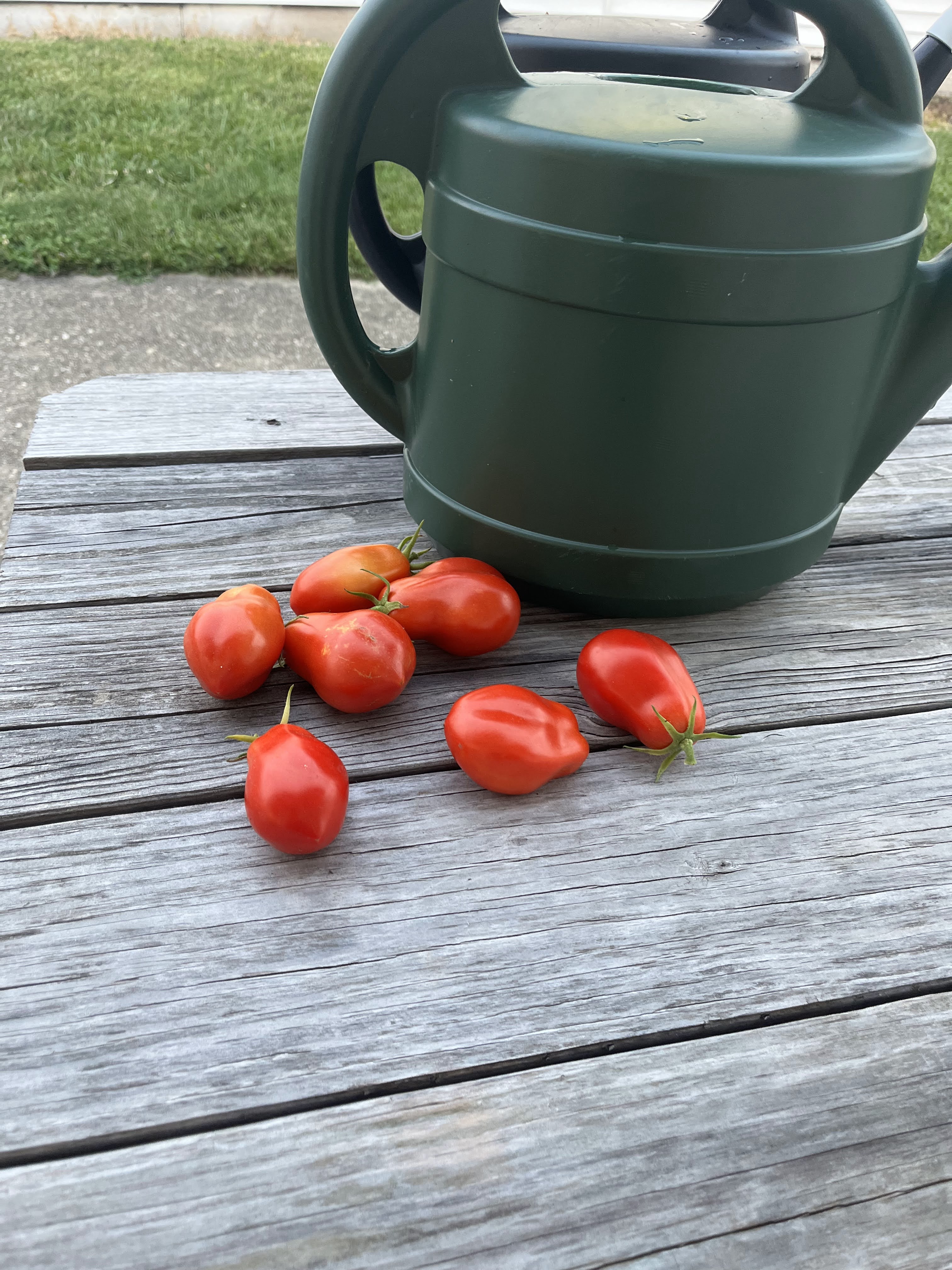
The garden has been good to me this year, including many tomatoes, cucumbers, and all the zucchini you could ever want or ask for. When I was ordering seeds, I made sure to include roma tomatoes in the list, because I knew I wanted to try canning and making tomato sauce. And you bet these little guys delivered.
So, a couple weekends ago, I spent a day with my mom learning how to water bath can some pizza sauce. It was a great excuse to spend time with my mama, for one thing. For another, it was an incredible learning experience that I will certainly need to repeat a few times to get the hang of it. Not sure yet if the roma plant will produce enough for a second round of canning, but there is always next year!
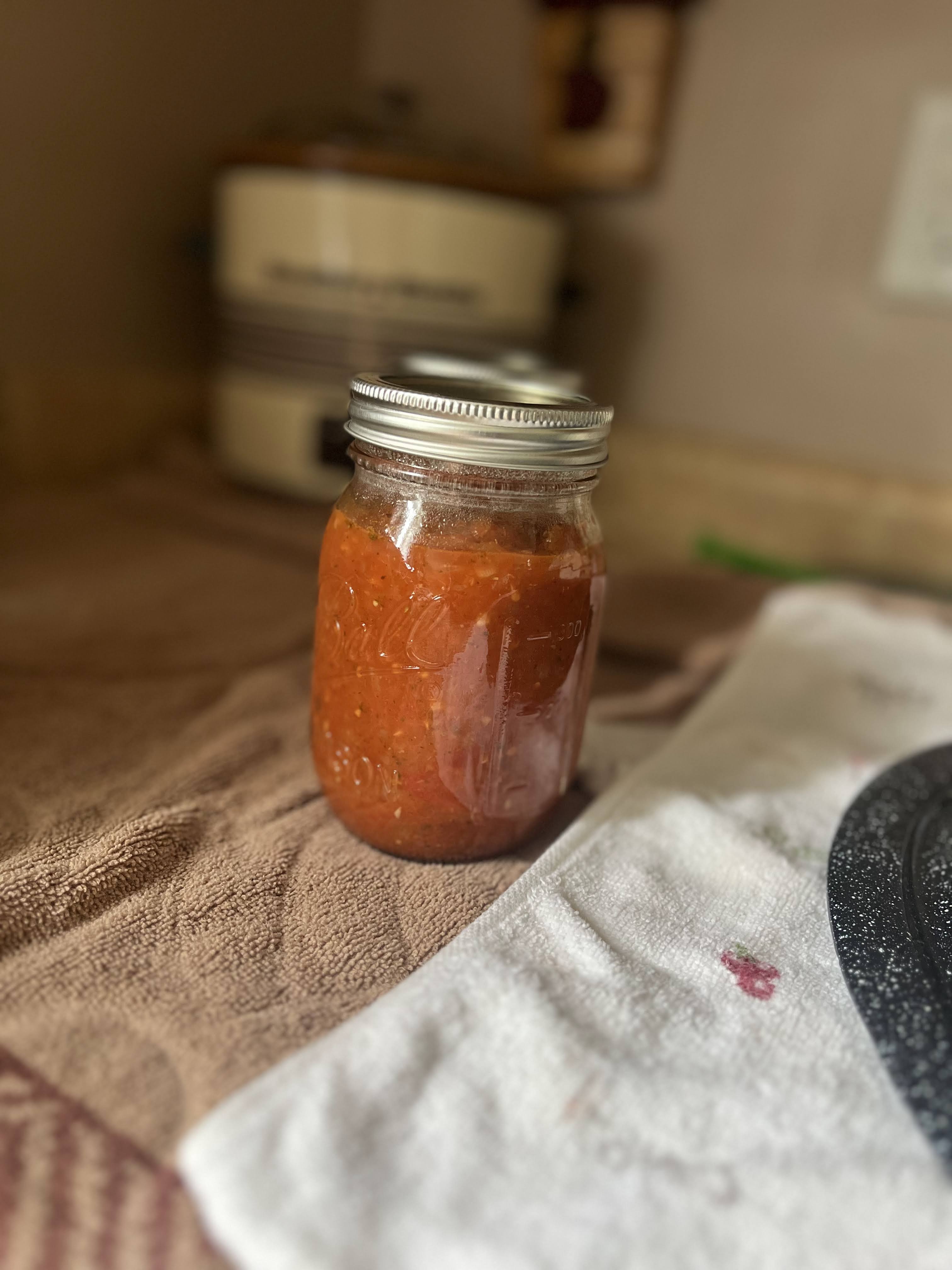
Pizza sauce of my heart
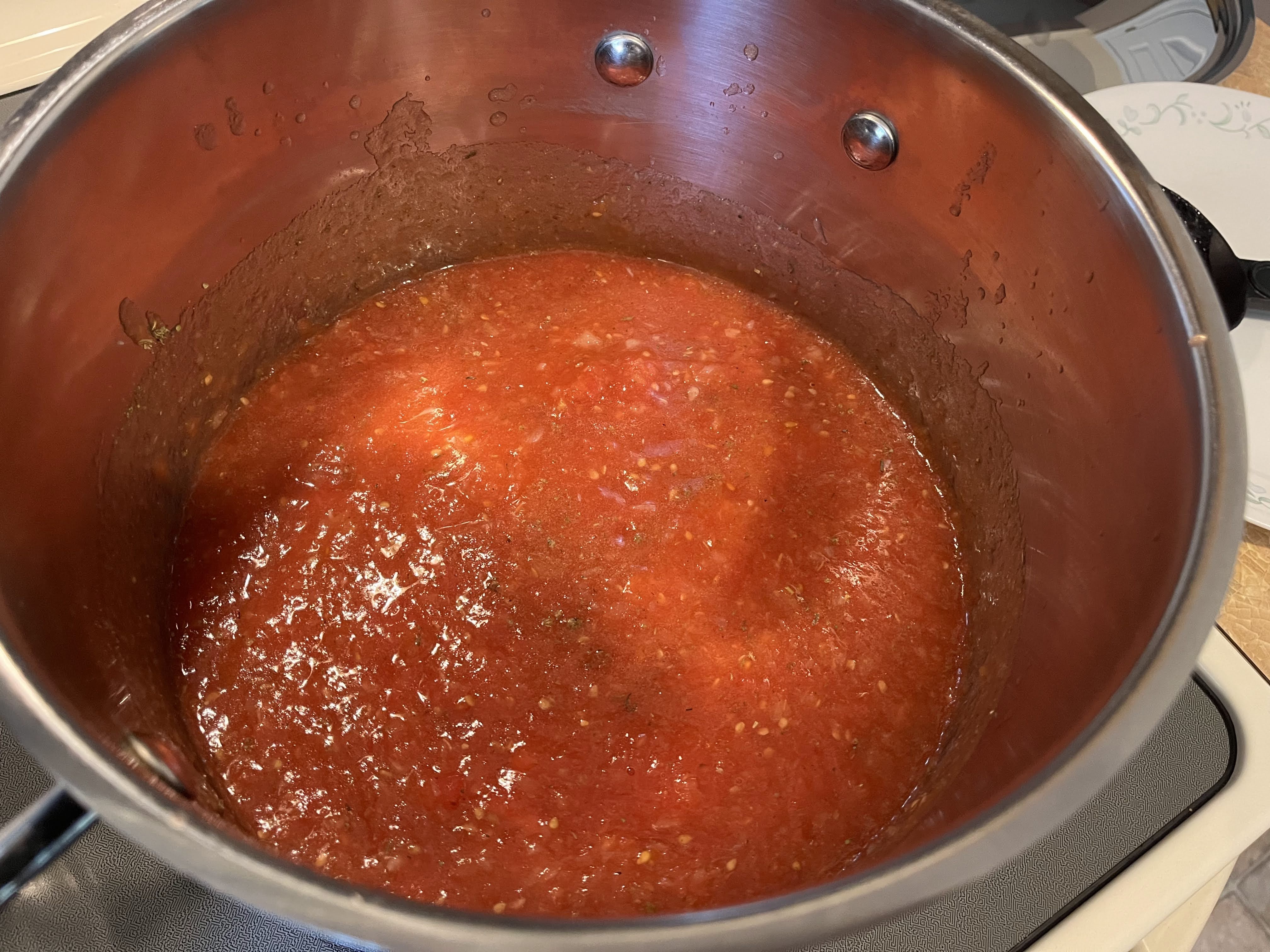
I used a recipe from Lord Byron’s Kitchen for canned pizza sauce. One key to a successful water bath can, I’ve learned, is making sure you process (i.e., cook) whatever you’re canning for long enough. When you put the sauce in the jars, part of the process is making sure it’s hot to create a good seal from the inside and outside of the ring on your canning lids. So it does matter what recipe you follow — it should be specific to canning. This recipe, for instance, called for four hours of cooking the sauce on a low heat.
This recipe includes lemon juice to balance the pH of the sauce — some recipes will call for citric acid for this purpose, too. We put a teaspoon of lemon juice into each jar.
There are a lot of moving parts to this recipe, and figuring out when to do what was something we definitely learned as we went. I mostly worked by the seat of my pants, and I’ll have a lot of experience to base my work off the next time.
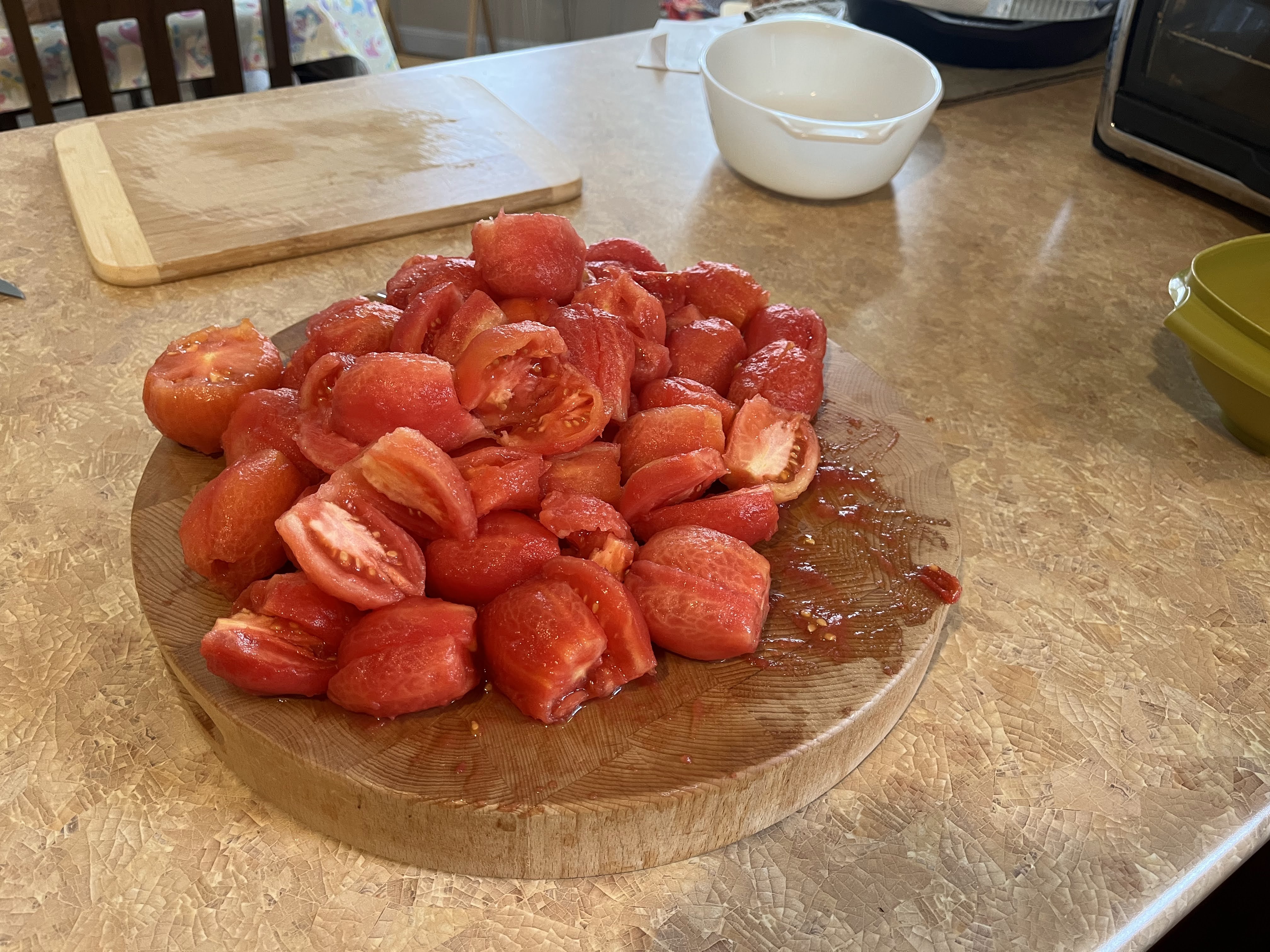
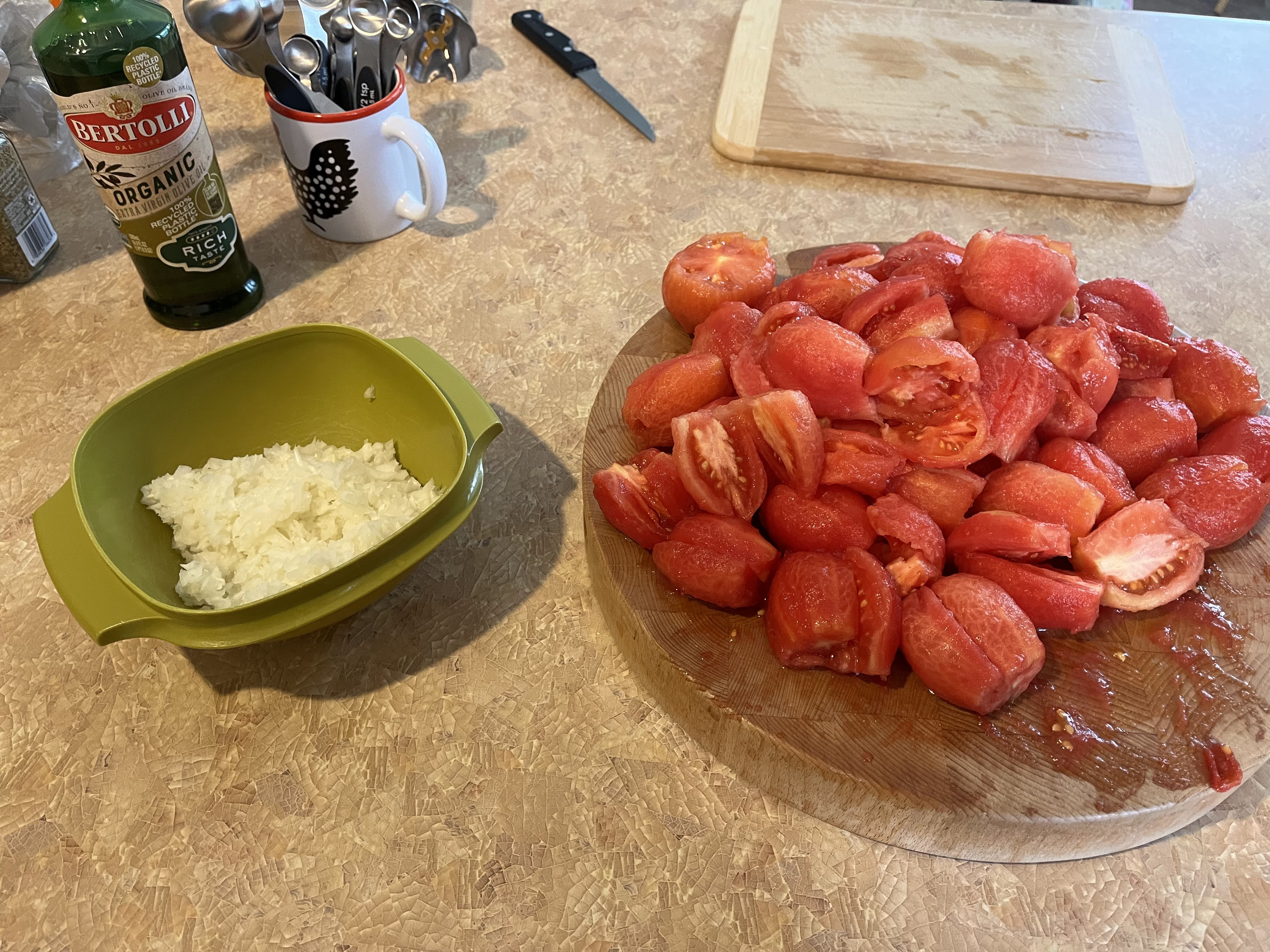
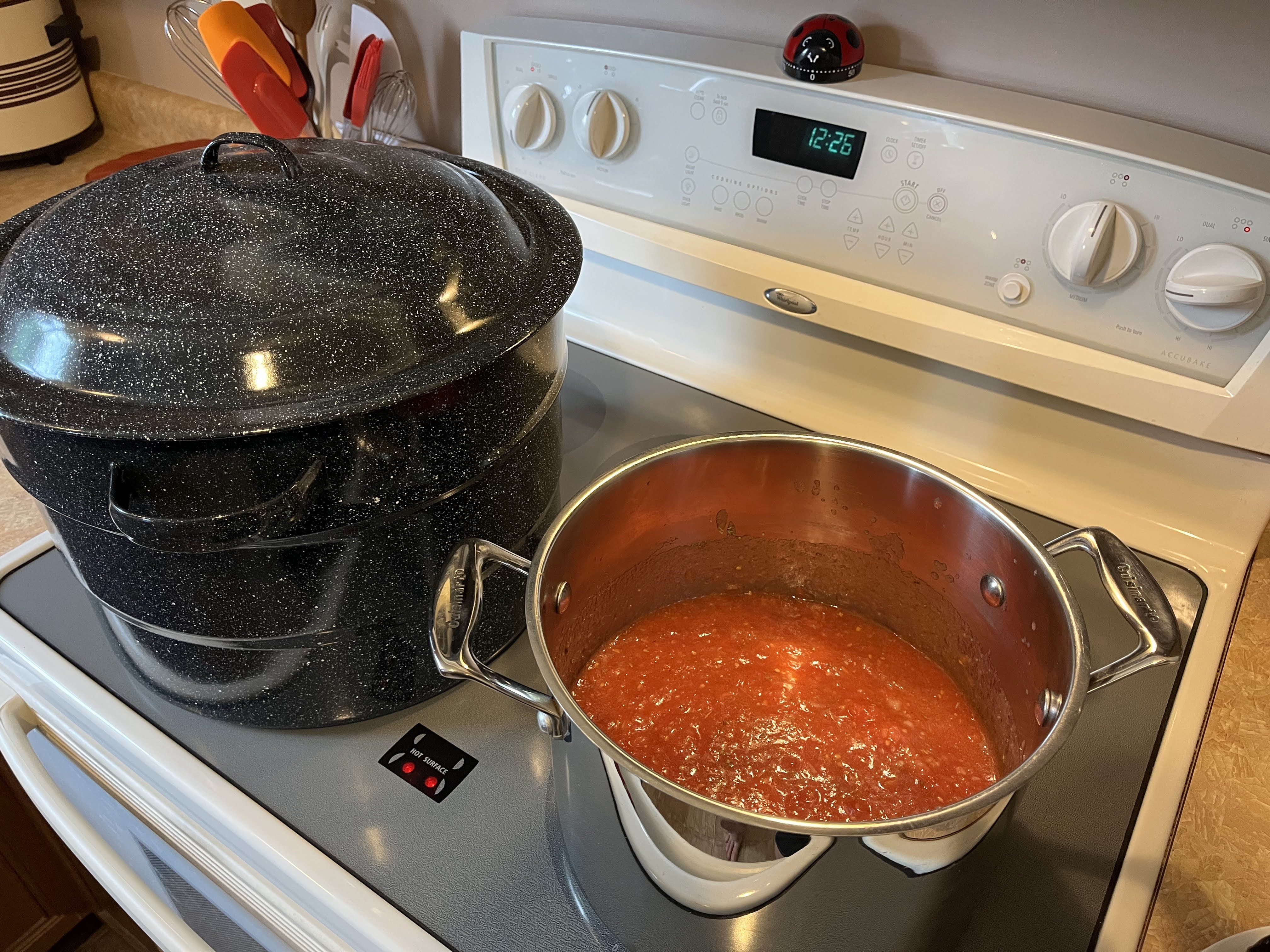
We learned:
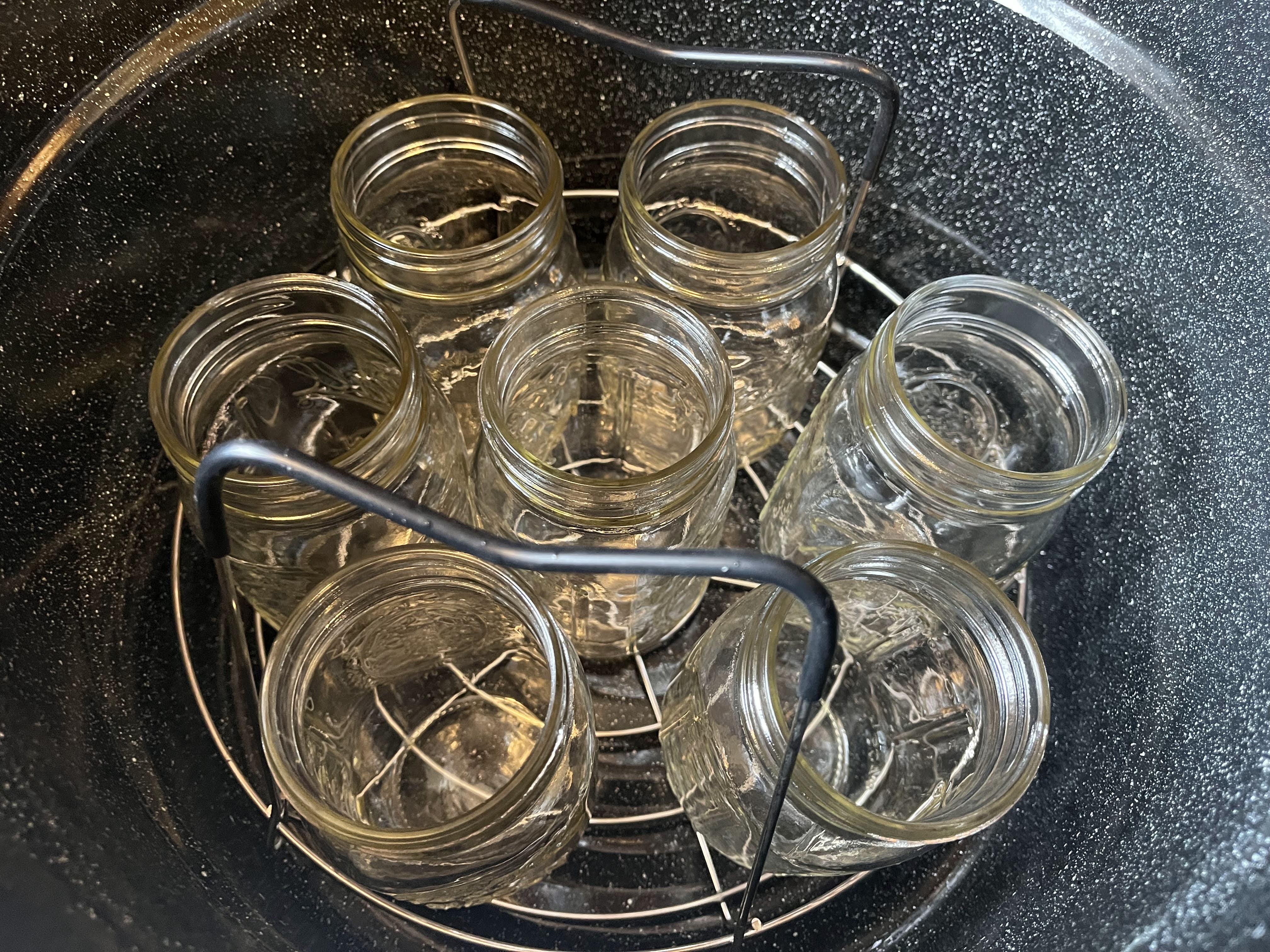
- How to use the canning implements (including the jar gripper, which we spent an embarrassing amount of time struggling to use upside down and wondering why it wouldn’t work).
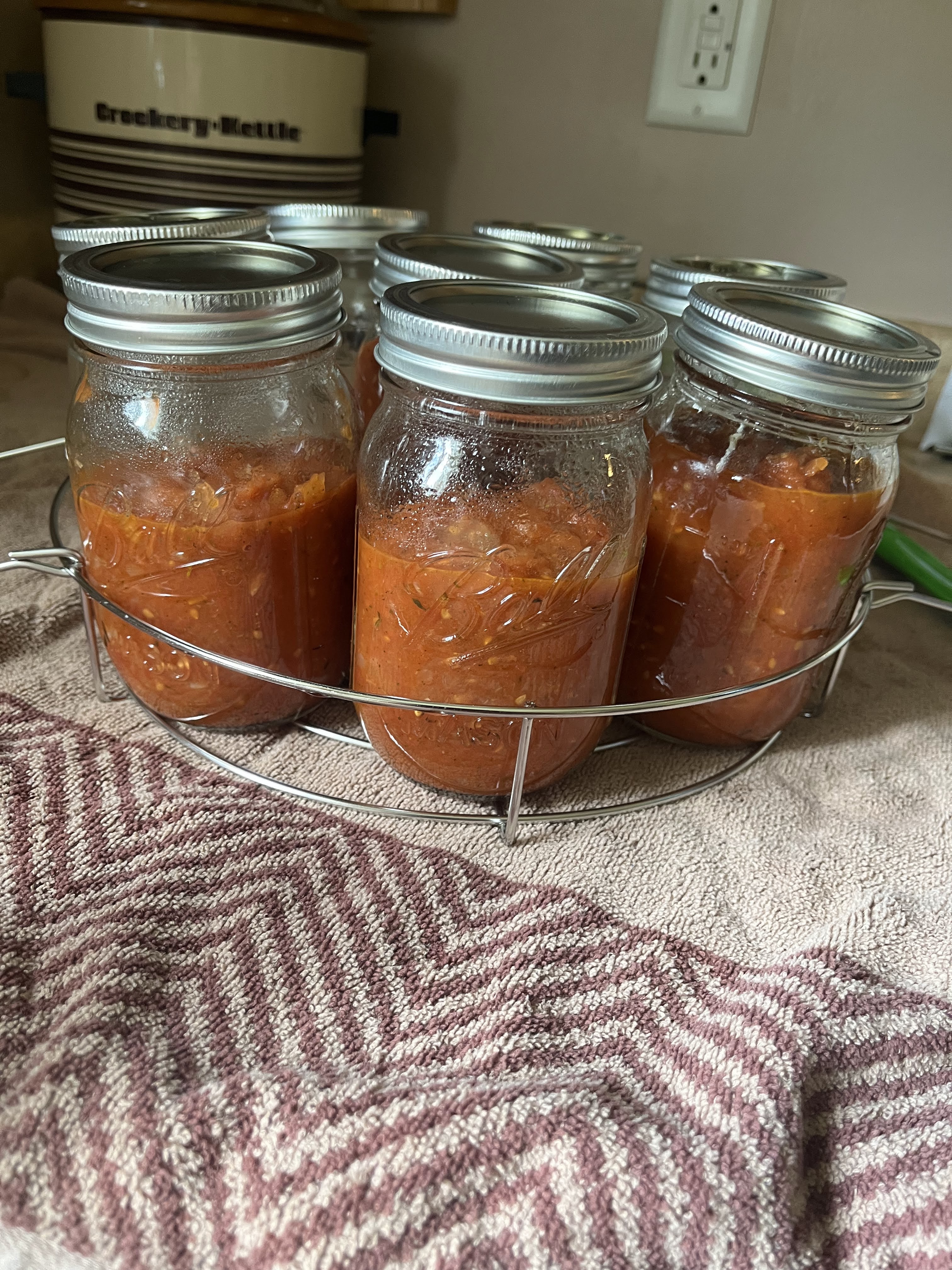
- To determine whether our jars sealed via listening for distinct popping noises. The first time it happened, my heart sank, because I thought that meant we had somehow failed. But my mom saved the day by explaining that that’s how you know the jars are sealing! The popping is the air being pushed out of the jar.
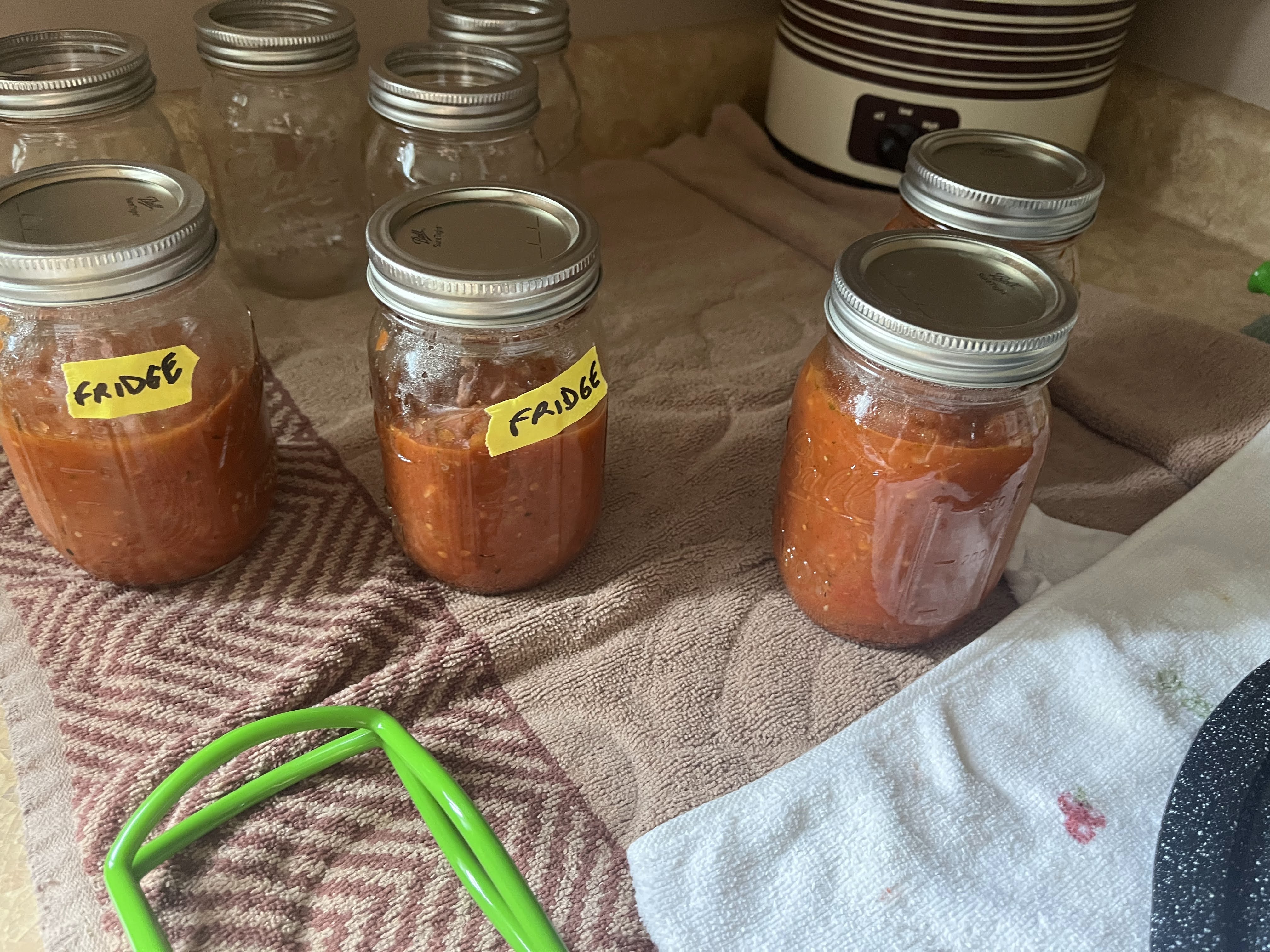
- To fill the jars all the way to the top (something canners call “leaving not a lot of headroom”) or they’ll float in the water bath (and therefore not seal). We had this issue with two of our jars. These are the ones labeled “fridge” in the photos — they’ll have to be used first.
- The water has to be boiling before you put them in to seal, so it would be best to start the pot to boil while you’re cooking the sauce. The giant water bath canner takes a long time to boil.
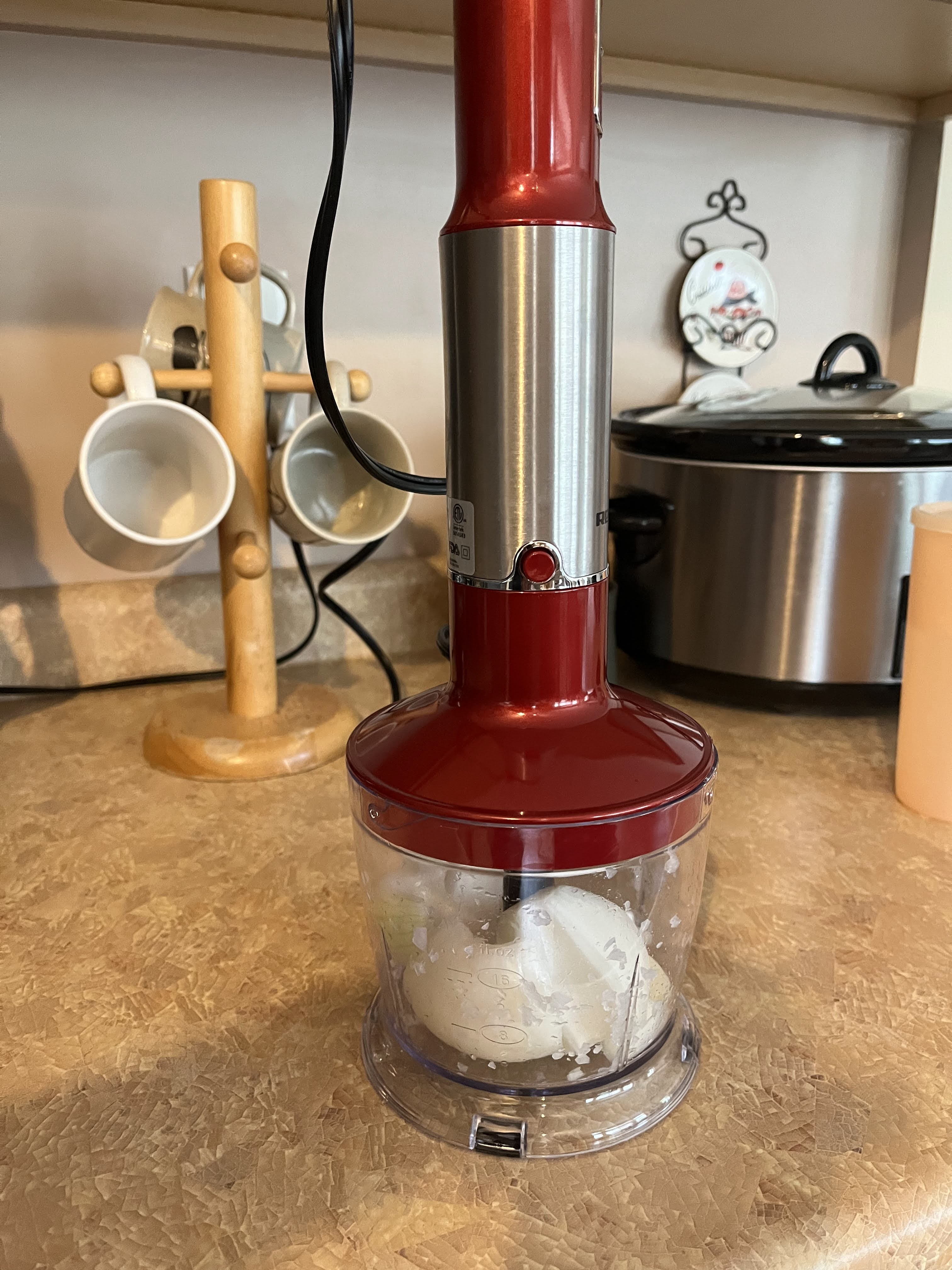
One surprise for the day was my immersion blender, which I learned has a lot of attachments, including a food processor and milk frother! It’s entirely possible that the next time I do this recipe, I’ll find more things to do with my immersion blender and attachments. For now, I was excited to find that I can do more things than I thought I could with these regular-seeming tools.
In all, it was an exciting experiment — one that I will repeat. I’m happy that I got to spend time with my mom and that we got to learn something together. She’s still teaching me things, always, and I hope I can return the favor someday. Love you, mama.
And I know you’re wondering if I’ve used the sauce yet… Of course! It was delicious.

Here’s to more learning and growing!
 Liz Cultivates | L.M. Fern
Leave a comment